








Open Ended Play – Toys That Inspire Imagination and Creativity
Discover our range of open ended play toys for children aged 1, 2, 3, 4 and 5. Toys that encourage open ended play, stimulate imagination and creativity, and give children the freedom to explore, experiment and create their own adventures.
What is open ended play?
Open ended play is a way of playing in which children decide for themselves what to do, how to play and what they want to create. There are no fixed rules, instructions or predetermined outcomes. Instead, children use their imagination to come up with their own ideas and discover new ways to play.
For example, a collection of wooden blocks can become a tower, a bridge, a house or an entire imaginary world. Large building blocks, stacking toys and loose parts can also be combined in countless different ways.
Open ended play toys do not have just one purpose. They give children the freedom to experiment, explore and develop their own games. The same toys can be used in completely different ways as children grow and discover new interests.
Why is open ended play important for children?
Open ended play is an important part of childhood development. When children are free to choose how they play, they learn to think independently, explore new possibilities and turn their own ideas into reality.
Open ended play toys support several areas of development:
-
Imagination and creativity: children invent stories, create imaginary worlds and find new ways to use their toys.
-
Independent play: without fixed rules or instructions, children learn to make their own choices and organise their play.
-
Problem-solving skills: building, experimenting and trying different solutions help children develop logical thinking.
-
Motor skills: stacking, building, sorting and manipulating objects help develop fine and gross motor skills.
-
Social skills: playing together encourages children to share ideas, cooperate and take turns.
One of the greatest benefits of open ended play toys is that they grow with the child. Younger children start by stacking and exploring, while older children use the same materials to create more complex structures and imaginative play scenarios.
Open ended play toys by age
The most suitable open ended play toys depend on a child's age and stage of development. Some materials are already interesting for toddlers, while others offer more possibilities as children become older and develop more advanced play skills.
Open ended play toys for 1 year olds
At one year old, children explore the world by touching, grasping, moving and handling objects. Open ended play toys for 1 year olds should therefore be simple, safe and easy to explore.
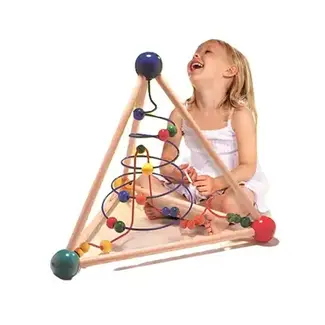
Large wooden shapes, stacking blocks, wire bead toys and sturdy play materials encourage babies and toddlers to discover different shapes, textures and movements. They can stack objects, knock them over and start again.
At this age, the emphasis is on exploring and experimenting. Always choose age-appropriate toys without small parts that could present a choking hazard.
Open ended play toys for 2 year olds
Two-year-olds are becoming increasingly independent and enjoy experimenting with objects in different ways. They start to stack, sort, combine and build simple structures.
Giant building blocks, wooden blocks and versatile play materials are particularly suitable. Children discover that the same toys can be used in many different ways. They also begin to imitate everyday situations and develop their first imaginative play scenarios.
Open ended play toys for 3 year olds
At three years old, imagination becomes an increasingly important part of play. Children start inventing their own stories and creating imaginary worlds.
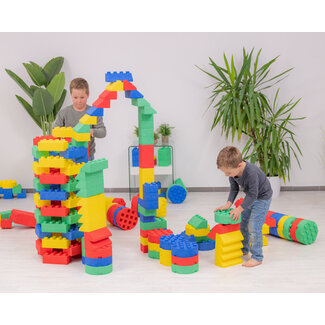
Open ended play toys for 3 year olds offer plenty of opportunities to build houses, towers, roads and other structures. Children can also combine different materials to create a castle, a zoo or an imaginary town with the MODO buidling blocks or the giant Lego bricks.
These activities encourage children to experiment, plan and find their own solutions.
Open ended play toys for 4 year olds
Four-year-olds are increasingly able to develop more complex play ideas. They enjoy building larger structures, combining different materials and working together with other children.
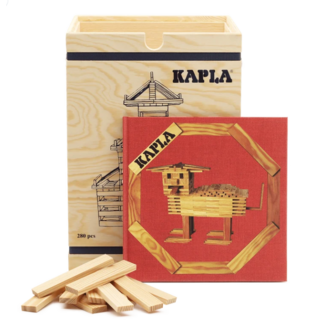
Open ended play toys for 4 year olds include wooden building blocks, Kapla planks and Kapla connectors and large construction materials. Children can experiment with shapes, balance and stability while bringing their own ideas to life.
Open ended play toys for 5 year olds
Five-year-olds can often concentrate on their own play ideas for longer periods. They enjoy creating elaborate constructions, inventing stories and developing imaginative play scenarios.
Open ended play toys for 5 year olds provide the freedom to experiment with different solutions, adapt constructions and develop new ideas. Because there is no fixed result, the same toys continue to offer new challenges and possibilities.
Different types of open ended play toys
Open ended play can take many forms. The most important feature is that children can decide for themselves how to use the toys and materials.
Building and construction toys
Building materials are among the best examples of open ended play toys. Wooden blocks, Kapla planks and large building blocks allow children to create all kinds of structures.
From simple towers to elaborate buildings, children can build, take apart and start again whenever they want. There are almost no limits to what they can create.
Large building blocks and soft building blocks
Large building blocks are ideal for children who enjoy building and experimenting. Their size makes it possible to create bigger structures, often together with other children.
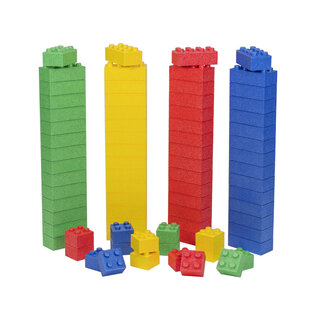
Soft building blocks are a lightweight and soft alternative to traditional construction toys. They can be used to build towers, walls, houses and imaginative structures. They are particularly suitable for nurseries, preschools and schools.
Wooden open ended toys
Wooden toys are popular because they are durable, sturdy and versatile. Wooden blocks, shapes and loose wooden elements can be combined in many different ways.
However, not every wooden toy is automatically an open ended toy. A wooden puzzle or shape sorter, for example, usually has a specific purpose. Wooden building blocks and loose shapes offer much more freedom to play.
Loose parts and open ended materials
Loose parts are individual materials that children can collect, move, sort and combine according to their own ideas.
They do not have a fixed purpose and encourage experimentation. Children can use them to create patterns, decorate constructions or invent their own imaginary play worlds.
Imaginative play toys and pretend play toys
Imaginative play is an important part of childhood. Children use their imagination to create stories, explore different roles and recreate situations from everyday life.
Imaginative play toys and pretend play toys give children the opportunity to act out different situations and develop their own imaginary worlds.
A children's play kitchen is a great example. Children can pretend to cook, prepare meals, serve food in a restaurant or run their own little shop. They decide what happens and create their own stories.
Other examples of imaginative play toys include:
-
Play kitchens: children pretend to cook, bake and prepare meals.
-
Pretend food and kitchen accessories: encourage role-playing and creative scenarios.
-
Play shops: children take on the roles of shopkeepers and customers.
-
Role-play furniture: helps children create their own home, restaurant or other imaginary setting.
Pretend play toys can be used in many different ways. A play kitchen, for example, can become a restaurant, a bakery or a family kitchen. Children develop language skills, social interaction and creativity while playing.
Open ended play in nurseries and schools
Open ended play toys are not only suitable for use at home. They also offer many opportunities in nurseries, preschools and primary schools.
In a nursery or preschool, open ended
